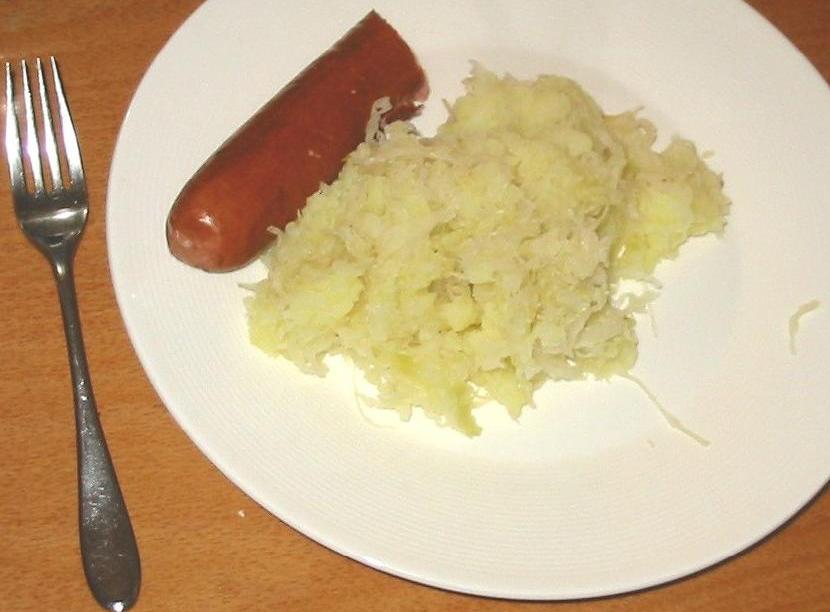
Lactic acid fermentation is among the oldest methods of food preservation practised in Poland. The process relies on naturally present bacteria — primarily Lactobacillus species — converting sugars into lactic acid. The resulting acidic environment inhibits the growth of harmful microorganisms without the need for heat treatment or artificial preservatives.
Three vegetables dominate traditional Polish fermentation: white cabbage (kapusta biała), field cucumbers (ogórki gruntowe), and red beets (buraki ćwikłowe). Each requires a different salt concentration, vessel, and fermentation period.
The Role of Salt
Salt (sodium chloride) performs two functions in lactic fermentation: it draws water out of the vegetable through osmosis, creating the brine, and it suppresses unwanted bacteria in the initial stages before the pH drops sufficiently. Getting the concentration right is critical.
Standard salt concentrations for Polish fermentation:
Kapusta kiszona: 2% salt by weight of shredded cabbage (20 g per 1 kg)
Ogórki kiszone: 1.5–2% brine by volume (15–20 g salt per 1 litre of water)
Kwas buraczany / kiszone buraki: 2% brine by volume
Non-iodised salt is strongly preferred. Iodine can inhibit fermentation bacteria and discolour produce, particularly beets. Rock salt (sól kamienna) or canning-grade salt (sól konserwowa) are the most common choices in Polish households.
Kapusta Kiszona (Sauerkraut)
Polish sauerkraut is made from thinly shredded white cabbage fermented in its own brine. The cabbage is shredded, salted, and packed tightly — the physical compression forces juice out and eliminates air pockets.
Process overview
- Remove outer leaves from the cabbage head; reserve one or two whole leaves for later.
- Quarter and core the head. Shred finely — 2–3 mm thickness is typical.
- Weigh the shredded cabbage. Calculate 2% of that weight in non-iodised salt.
- Combine cabbage and salt in a large bowl. Massage and squeeze firmly for 5–10 minutes until substantial liquid is released.
- Pack tightly into a ceramic crock or large glass jar, pressing down after each addition to eliminate air.
- Place reserved whole leaves on top, then weigh down with a plate, stone, or water-filled jar to keep the shreds submerged under brine.
- Cover with a cloth to keep out debris but allow gas to escape.
- Ferment at room temperature (18–22 °C). Begin tasting after 3–5 days. Full sour flavour develops in 2–4 weeks.
- Once the desired acidity is reached, transfer to refrigerator or a cool cellar (2–8 °C) to slow further fermentation.
Regional notes
In parts of Mazowsze and Podlasie, caraway seeds (kminek) are added at roughly 1 teaspoon per kilogram of cabbage, contributing flavour without affecting the fermentation process. Juniper berries and bay leaves appear in some regional recipes from Podkarpacie.
Ogórki Kiszone (Lacto-Fermented Cucumbers)
Polish lacto-fermented cucumbers differ from vinegar pickles: they are not heat-processed and retain live cultures. The fermentation brine is prepared separately and poured over the cucumbers.
Cucumber selection
Field cucumbers (ogórki gruntowe) are preferred over greenhouse varieties. They are smaller, have thinner skins with pronounced bumps, and remain firmer after fermentation. Cucumbers should be fresh — ideally processed within 24 hours of harvest. Wilted cucumbers produce a softer, less desirable texture.
Aromatics used in Polish tradition
- Fresh dill with flower heads — 2–3 heads per litre jar
- Garlic cloves — 2–4 per jar, slightly crushed
- Horseradish leaves (liście chrzanu) — 1–2 per jar; tannins help maintain crunch
- Oak or cherry leaves — serve the same tannin-preservation function
- Black currant leaves (liście czarnej porzeczki) — aromatic addition used in eastern Poland
Step-by-step brine fermentation
- Dissolve 15–20 g of non-iodised salt in 1 litre of cold water. Do not use hot water — it can wilt cucumbers prematurely.
- Scrub cucumbers thoroughly. Trim a thin slice from the blossom end — this contains enzymes that soften pickles.
- Layer aromatics into the jar, pack cucumbers vertically and tightly.
- Pour brine to cover cucumbers fully. Leave 2–3 cm headspace.
- Cover loosely (not sealed) to allow CO₂ to escape. A cloth secured with a rubber band works well.
- Ferment at room temperature (18–22 °C) for 3–5 days for half-sour style (małosolne), or 7–14 days for fully sour.
- Refrigerate when the desired sourness is reached.
Kiszone Buraki (Fermented Beets)
Fermented beets produce kwas buraczany — a tart, earthy brine used as a base for borscht (barszcz czerwony). The solids can also be consumed directly.
- Peel and slice or grate raw beets (not cooked — heat destroys fermentation bacteria)
- Pack into jars or a crock with optional additions: garlic, allspice berries, bay leaves
- Cover with 2% brine
- Ferment 5–7 days at room temperature; a foam layer on the surface is normal and can be skimmed
- Strain and refrigerate the brine; use within 4–6 weeks
Troubleshooting Common Problems
| Issue | Likely cause | Action |
|---|---|---|
| White film on surface | Kahm yeast — harmless surface yeast | Skim off; ensure vegetables stay submerged |
| Soft, mushy texture | Too warm, too low salt, or overripe produce | Reduce fermentation temperature; use firmer cucumbers next time |
| No bubbling after 48 hours | Too cold or too much salt | Move to warmer location; check salt ratio |
| Off smell (putrid, not sour) | Contamination or produce submerged inadequately | Discard batch; sanitise vessel thoroughly |
| Pink discolouration in sauerkraut | Wild yeasts or salt contaminated with iodine | Switch to non-iodised salt; discard if mould is present |
Storage Conditions
Actively fermenting products should be stored at 2–8 °C once the target acidity is reached. A cool cellar (piwnica) at 4–10 °C extends shelf life considerably. Fully fermented kapusta keeps for 3–6 months under refrigeration. Ogórki kiszone remain palatable for 2–4 months; beyond that, they become progressively more acidic and softer.